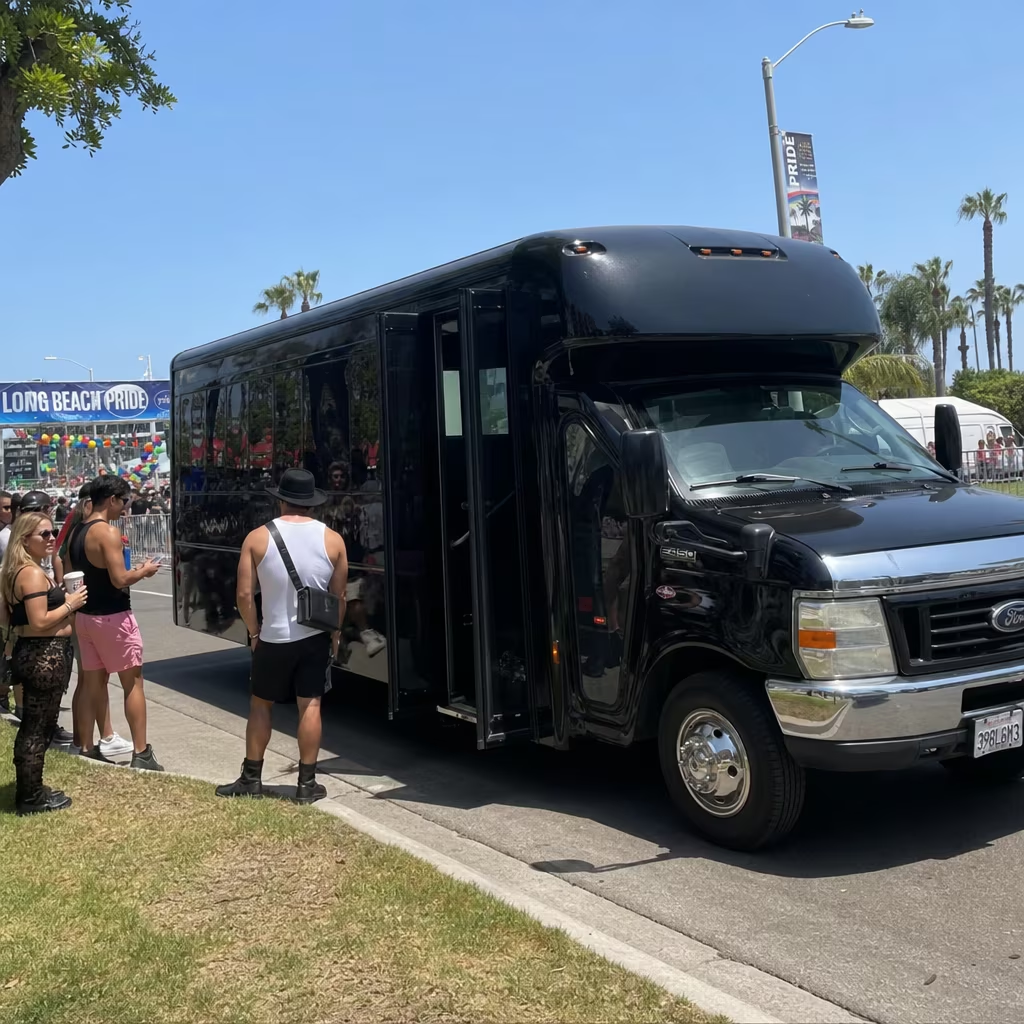
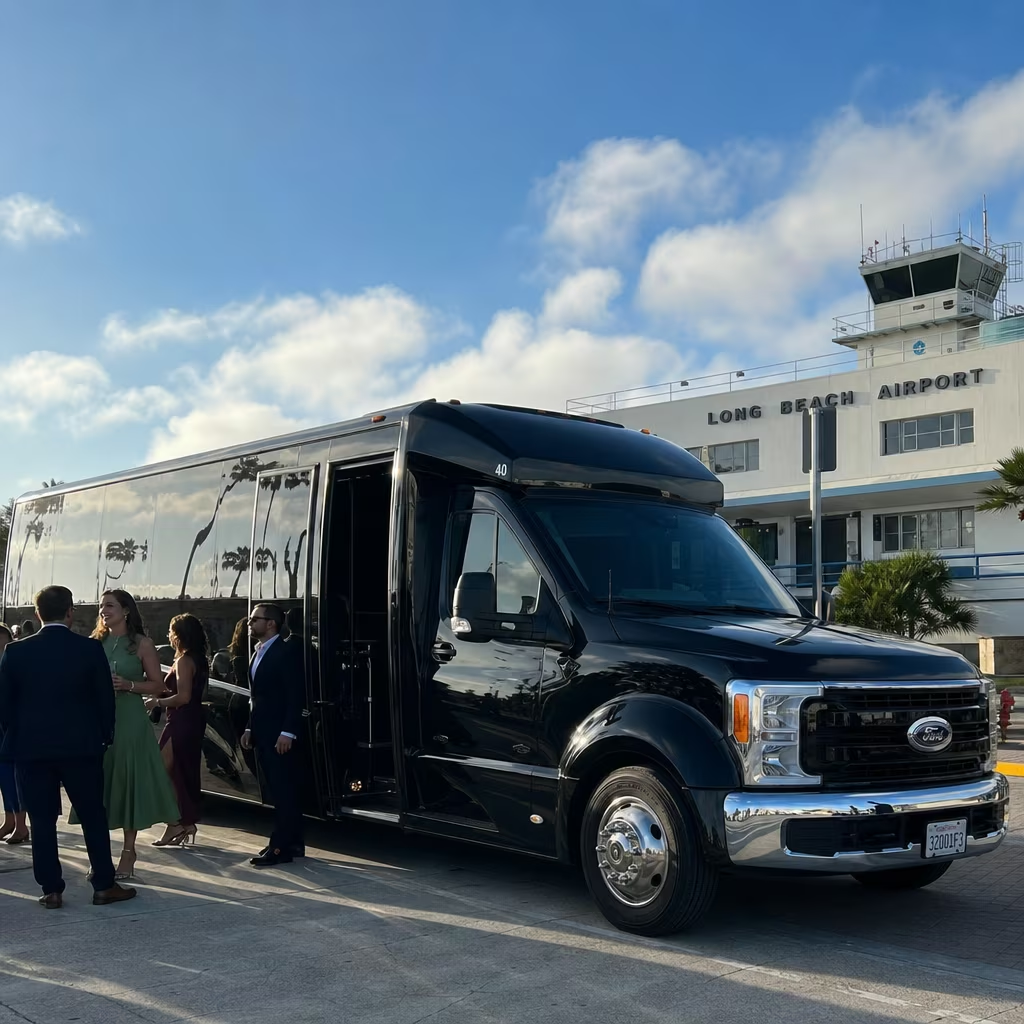
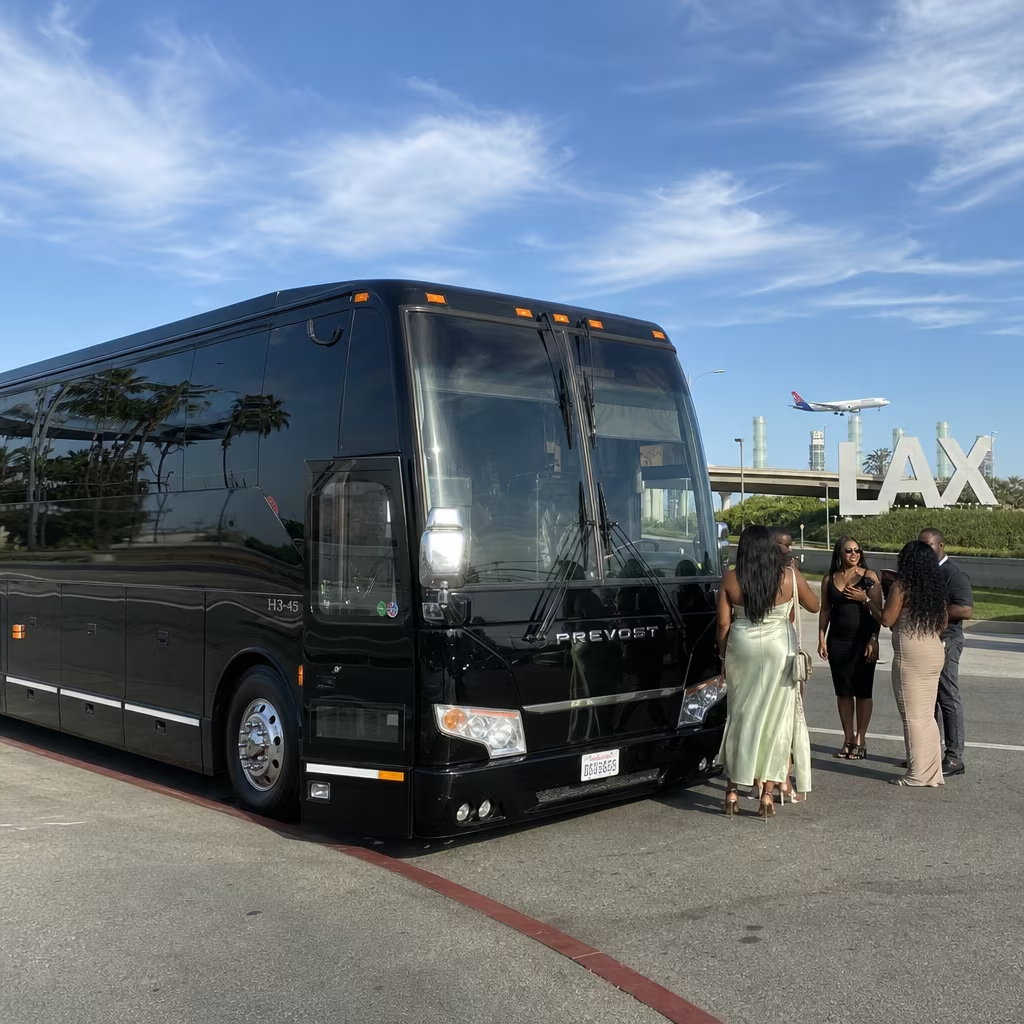
Every April, downtown Long Beach shuts down — and about 200,000 people try to get in anyway. The 1.968-mile street circuit that snakes around the Long Beach Convention Center along Shoreline Drive and Seaside Way has been drawing massive crowds since 1975, and the logistical crunch that comes with it hasn't gotten any simpler. Westbound Shoreline Drive closes.
The Queensway Bridge ramps close. Side streets off Seaside Way go dark before 7 a.m. on race days, and rideshare surge pricing kicks in the moment qualifying ends. If you've ever scrambled for parking on Ocean Boulevard with 30 minutes to first green flag, you already know.
This guide is built for the person organizing a group — the one who booked the tickets, sent the group chat, and is now staring at the City of Long Beach's street closure map wondering how to get everyone there and back without losing someone in the Shoreline Parking scramble. We cover exactly where your bus drops off, how to approach the circuit from I-710, what the two main parking lots actually cost and who they're for, and why a Long Beach party bus rental beats the alternatives the moment your group grows past a few cars. The race weekend logistics below are drawn from the Grand Prix's own published directions and the City of Long Beach's official road closure announcements — so this is current, not recycled from three years ago.
Event dates
April 17–19, 2026 (Friday–Sunday)
Weekend attendance
~200,000 fans across three days
Official bus/rideshare drop-off
First Street between Elm Ave & Long Beach Blvd
Circuit address (GPS)
300 East Ocean Blvd, Long Beach, CA 90802
Road closures begin
Wednesday, April 15 at 4 a.m.
From Lakewood
~9 miles via I-710 S — 20 min off-peak
Why the Grand Prix Is a Group Transportation Problem
The Long Beach Grand Prix isn't a stadium event with a single parking structure and a clear path to your seat. It's a temporary street circuit laid over roughly 11 city blocks, surrounded by a tight grid of downtown streets that the City of Long Beach progressively closes starting the Wednesday before race weekend. By Friday morning, the core circuit perimeter — Shoreline Drive, Seaside Way, Aquarium Way, and most of the Queensway Bridge ramps — is effectively shut to non-credentialed vehicles.
That grid pattern means there's no "just circle around and find a spot." Every approach route narrows to a handful of managed corridors, and parking sells out on the two dedicated lots before the weekend even starts.
For a group of 20 or 30 people coming from Lakewood, Compton, Carson, or anywhere else on the I-710 corridor, coordinating that arrival across multiple cars is genuinely difficult. Each car needs its own pre-purchased parking pass — no day-of sales at the gate. The two main lots (Pike Parking near Chestnut and Seaside Way, Shoreline Parking at the end of the 710 at Golden Shore Avenue) are walking distance from grandstands but fill early and cost real money per vehicle.
And then there's the post-race exit: 200,000 people hitting Pine Avenue and Ocean Boulevard simultaneously while police manage traffic flows out of a closed downtown grid.
A Long Beach charter bus rental cuts out almost all of that. One vehicle, one parking situation, one drop-off at the official circuit zone — and when the checkered flag drops, the bus is waiting and ready rather than stuck three blocks inside a closed grid. Here's what that actually looks like on race weekend.
Where Your Bus Drops Off at the Grand Prix
The official race circuit drop-off point — published on the Acura Grand Prix of Long Beach directions page — is First Street between Elm Avenue and Long Beach Boulevard. That's the designated zone for Uber, Lyft, taxis, and private vehicles dropping passengers curbside. For a charter bus, this is your landing strip: the group unloads on First Street, and the bus exits back into the approach grid before the road becomes fully restricted.
First Street sits on the north side of the circuit, just a short walk from the main pedestrian gates. The nearest Metro A Line (formerly Blue Line) station — the Downtown Long Beach station at 1st Street between Pine Avenue and Pacific Avenue — puts light rail riders at essentially the same entry point, which tells you this is intentionally the pedestrian corridor the event funnels everyone through. From First Street, your group crosses into the circuit area and reaches most grandstand sections without needing to navigate Shoreline Drive or Seaside Way at all.
One thing to coordinate before race day: confirm your group's specific re-entry or pick-up window when you book. After the Sunday IndyCar race — which starts at 2:45 p.m. and runs roughly two hours — the combination of post-race pedestrian exits and the closure grid means First Street fills fast. A set pick-up time, 45 minutes to an hour after the checkered flag, gives the initial crush time to clear and keeps your bus from sitting in managed traffic outflows longer than necessary.
We sort that timing out when you book so there's no scramble at the curb.
The one-line version: your bus drops the group at First Street between Elm and Long Beach Blvd — the event's own designated vehicle drop-off zone, steps from the main pedestrian entrance. That single fact is what keeps a 25-person fan group together and walking in rather than scattered across three different parking approaches.
The Road Closure Timeline: What Actually Closes and When
This is the part most "Grand Prix transportation" articles gloss over, and it's the part that catches first-timers badly. The City of Long Beach doesn't just shut down a couple of race lanes on race day. The closure sequence is multi-phase, beginning several days before the first car turns a wheel, and it systematically seals off the downtown grid until the circuit perimeter is completely credentialed-only access.
For the 2026 event (April 17–19), here's what the City of Long Beach's official traffic advisory shows:
- Wednesday, April 15 at 4 a.m.: Side streets off Shoreline Drive and Seaside Way begin closing. These are the connector streets that normally let you cut through toward the waterfront from Ocean Boulevard — gone.
- Wednesday, April 15 at 7 a.m.: Westbound Shoreline Drive closes. So does the northbound Queensway Bridge off-ramp, the southbound Queensway Bridge on-ramp from Shoreline Drive, and Aquarium Way south of Shoreline Drive.
- Wednesday–Thursday closure extension: Eastbound Shoreline Drive from Broadway to Ocean Boulevard closes. All vehicles must exit the Aquarium parking structure by 3 p.m. Thursday.
- Race days (Friday–Sunday): Access to the south side of the circuit is restricted to Grand Prix passholders and boat owner permit holders, via Ocean Boulevard and Alamitos Avenue only. For everyone else, the waterfront side of the circuit is a credentialed perimeter.
- Monday, April 20 at 5 p.m.: Normal traffic patterns resume.
What this means practically: if your group tries to drive downtown and park on Saturday morning, the approach you're thinking of — Shoreline Drive, the PCH connector, the Queensway — is gone. The only managed approaches are Pine Avenue (which stays open for the Hyatt, waterfront restaurants, and marina tenants), the pre-purchased lot approaches via Golden Shore Avenue (Shoreline Parking) or Chestnut Avenue at Ocean Boulevard (Pike Parking), and the First Street corridor from the north. A bus that knows where it's going uses First Street.
A car that doesn't have its route pre-planned ends up in a managed detour loop.
We always recommend verifying the specific closure schedule for your event date against the City of Long Beach press releases, since the exact timing of individual street openings can shift day-to-day during race week.
Parking at the Grand Prix: Both Lots Explained
The Grand Prix operates two main dedicated parking lots, both requiring pre-purchased passes and both filling significantly before race time. No day-of sales at the gate — that's a hard rule for both. Here's what each lot is actually like, so you understand what "reserved parking" means in practice before you pay for it.
Pike Parking (Chestnut Avenue at Ocean Boulevard)
Pike Parking sits at Chestnut Avenue and Seaside Way, adjacent to Turn 5 of the street circuit, near the Bubba Gump Shrimp Co. and Grandstands 5, 6, 7, 36, and 40. Access is via Chestnut Avenue at Ocean Boulevard. This is the lot closest to the action — you can hear the engines from the parking structure.
Three-day passes are sold for the full weekend.
The proximity is the appeal and the liability. Because it's right on the circuit perimeter, entry and exit are managed tightly. On Sunday afternoon, when the main IndyCar race ends and 200,000 people move toward exits simultaneously, this lot is in the middle of the pedestrian outflow.
Plan to wait. A group in a charter bus on First Street is out of that zone before the lot even opens its exits to traffic.
Shoreline Parking (710 Freeway Terminus, Golden Shore Avenue)
The Shoreline lot sits at the west end of the 710 freeway, accessed from the freeway at Broadway, right on Magnolia Street, right on Ocean Boulevard, and left on Golden Shore Avenue. It's also near Grandstands 5, 6, 7, 36, and 40, but approached from the west instead of the waterfront side. Both single-day and three-day passes are available here.
If you're coming down I-710 from Lakewood or the LA basin, Shoreline Parking is the natural approach — same freeway, same exit corridor. But "same freeway" as 200,000 other fans means the tail of I-710 South turns into a crawl on Saturday and Sunday mornings. The lot opens at 7 a.m. and the cars start queuing well before that.
A charter bus using the First Street drop-off bypasses this entirely: it pulls off before the freeway-adjacent lot approach congestion begins, drops your group, and clears the grid while everyone in the Shoreline lot queue is still waiting for an attendant to wave them through.
For current parking pass prices and availability, check the Grand Prix circuit map and parking page directly — lot assignments and pricing are confirmed seasonally. Downtown city lots are also available through Park Long Beach if the two main lots are sold out.
Every Transportation Option Compared
We'll be straight with you: the Grand Prix draws fans from across Southern California, and people find ways to get there every year. Here's the honest comparison of every option, scored on what actually matters for a group.
| Option | Cost shape | Arrive together? | Drop-off point | Post-race exit | Best for |
|---|---|---|---|---|---|
| Private charter bus | One flat rate, split by the group | Yes — one vehicle, one arrival | First St. drop-off zone | Bus waits; pick up on schedule | 10–56 people |
| Metro A Line | Per ticket from LA (~$1.75–$3.50) | Only if you board together | 1st Street station — same block | Packed trains post-race | 1–2 riders from LA |
| Rideshare (Uber/Lyft) | Per car each way + post-race surge | No — multiple cars | First St. drop-off zone | Surge pricing, long wait | 1–4 per car |
| Reserved lot parking | Per-vehicle pass, pre-purchased | Only if in same car | Pike or Shoreline lot | Lot exit gridlock post-race | 1–2 cars |
| Metrolink + LBT transfer | Per ticket + transit connection | No — transfers fragment groups | Transit stop, then walk | Transfer timing unreliable post-race | Solo commuters |
The honest read: for one or two people coming from downtown LA with a TAP card, the Metro A Line to the 1st Street station is genuinely efficient — the station sits essentially at the circuit's north gate. But the moment your group grows past a few people, the coordination cost tips the other way. Multiple rideshares arriving at different times, everyone trying to meet at the First Street drop-off while the road is filling with other dropped-off fans, and post-race surge pricing that can double or triple the return fare — that combination is why group organizers book a bus.
One flat rate, everyone together, and a set post-race pickup that beats the rideshare wait.
What Size Bus Does Your Group Need?
The Grand Prix draws groups of all shapes: a 10-person office crew that booked Turn 11 hospitality, a 40-person racing fan club from the LA basin, a 55-person corporate group with paddock passes. Here's how the vehicle lineup matches to those headcounts for a race weekend run from Lakewood or greater Long Beach.
| Vehicle | Typical capacity | Key amenities | Best for |
|---|---|---|---|
| 14-passenger Sprinter limo | Up to 14 | Premium leather, USB charging, tinted windows | Small VIP groups, paddock pass holders |
| 15–35 passenger minibus | ~15–35 | Powerful A/C, plush reclining seats, overhead storage | Mid-size fan groups, office parties, family outings |
| Party bus (15–50 passengers) | ~15–50 | Built-in bar, color-changing LED lighting, Bluetooth sound, flat-panel TVs | Race-day celebration groups who want the energy to start on the ride |
| 40–56 passenger charter bus | Up to 56 | Reclining seats, climate control, WiFi, power outlets, onboard restroom, undercarriage bays | Large fan clubs, corporate groups, school groups |
For most Grand Prix groups, the right pick is a minibus or full-size charter bus — the route from Lakewood is only about 9 miles down I-710 South, so a 20-to-30-minute transfer is comfortable even in standard seating. If your crew wants to turn the ride into part of the event (think pre-race playlist, a signature cocktail in hand before you clear the 710 off-ramp), a party bus with its built-in bar and LED lighting does that job. For groups hauling gear — sun tents, folding chairs within the allowed 11"x14" size, coolers under 14" — the charter bus undercarriage bays handle all of it cleanly while the minibus overhead bins may not.
ADA-accessible vehicles are available — just let us know your needs when you book and the right vehicle is confirmed in advance.
What It Costs to Rent a Bus to the Grand Prix
A Long Beach party bus or charter bus rental price is shaped by vehicle size, total hours, event date, and your pickup location. The Grand Prix weekend (April 17–19) is one of the highest-demand weekends of the year for group transportation in the Long Beach–Lakewood area. Book late and you're looking at premium weekend rates or no availability — book in January or February and you lock in better pricing and vehicle selection.
General rate ranges to anchor your estimate: 14-passenger Sprinter limos run $170–$344/hour; 15–20 passenger party buses run $204–$378/hour; 20–30 passenger party buses run $244–$414/hour; 35–50 passenger party buses and minibuses run $294–$490/hour; and 40–56 passenger charter buses run $150–$300/hour. Most Grand Prix runs are booked as a 4–6 hour block (departure from Lakewood, circuit time including race and post-race exit, return drop-offs), so budget accordingly.
Here's the per-person math that usually closes the decision: a 40-passenger charter bus at $250/hour for a 5-hour block runs $1,250 total — about $31 per person before you factor in the parking passes those 40 people didn't have to buy. Shoreline Parking passes aren't cheap, and each car in a caravan needs its own. One bus, one parking situation, and no one spent their race-day energy circling a closed grid looking for a spot that sold out three weeks ago.
Call 909-321-6116 for an all-inclusive quote in under 30 seconds.
A Real Race-Day Example
Here's how a typical run looks for a Lakewood-based fan group on Sunday: pickup at 11:30 a.m. from a central Lakewood location, I-710 South to Ocean Boulevard, First Street drop-off by 12:15 p.m. — two and a half hours before the 2:45 p.m. IndyCar start. Group watches qualifying warm-up, grabs food in the paddock area, settles into grandstand seats for the race.
Bus waits off the immediate circuit grid. Post-race pickup on First Street at 5:30 p.m. — about 45 minutes after the checkered flag — once the initial pedestrian crush has cleared the exits. Group is back in Lakewood by 6:15 p.m.
Total block: roughly 7 hours. Coordinating 30 separate cars through the same scenario on the same day costs more in gas, parking, and stress than any charter bus quote.
Grand Prix Weekend Schedule: IMSA Saturday, IndyCar Sunday
The 2026 Acura Grand Prix of Long Beach runs Friday through Sunday, April 17–19. The event isn't just the headliner IndyCar race — it's a full weekend of on-track sessions across two major racing series, which shapes when your group needs to arrive and how long you'll be on-circuit.
- Friday, April 17: Practice and qualifying sessions across both IndyCar and IMSA. Friday tickets are general admission only — the least expensive entry point and a good option for groups who want the atmosphere without the full weekend commitment. Gates open at 9 a.m.
- Saturday, April 18: The IMSA WeatherTech SportsCar Championship race runs at 1 p.m. — roughly a two-hour endurance race on the same street circuit. Saturday also includes IndyCar qualifying, which sets the grid for Sunday.
- Sunday, April 19: The featured NTT IndyCar Series race starts at 2:45 p.m. This is the main event, the highest-attendance day, and the day when the First Street drop-off corridor is at peak demand. If your group is Sunday-only, plan to arrive by noon to clear security and find grandstand positions before the pre-race ceremonies start.
Tickets range from $56 for a Friday general admission to $221 for a three-day reserved grandstand pass, per current IndyCar ticketing. Three-day admission includes NTT IndyCar paddock access and limited pit access during practice and qualifying. For current ticket availability, check the Grand Prix tickets page or call the ticket office at (888) 827-7333.
Before You Arrive: Policies and What You Can Bring
The Grand Prix publishes a clear prohibited items list on the Grand Prix policies page, and several items on it are the kind that surprise first-timers. Know this before your group loads the bus so nothing gets turned away at the gate.
Not allowed inside the circuit:
- Alcoholic beverages from outside (a cooler full of beer is a no)
- Ice chests larger than 14 inches — smaller personal coolers are fine
- Glass bottles and cans
- Seat cushions larger than 11"x14" — bring a smaller one if you need back support on the grandstand benches
- Banners and signs (pennant souvenirs sold on-site are allowed)
- Folding stadium seats, large umbrellas, lawn furniture, ladders
- Drones, tripods, skateboards, hoverboards
- Pets (trained service animals only)
- No smoking or vaping in any grandstand
The good news: the circuit has vendors, hospitality areas, and food and beverage throughout the event grounds — you're not left relying on what you brought in. What this means for your bus: tell your group to keep bags manageable and leave the big cooler in the bus's undercarriage bay for post-race tailgating in the parking area. The undercarriage is where your group's gear lives during the race so nobody's carrying a 30-quart cooler through the grandstand aisles.
Coming from Los Angeles and the Region: Drive Times by Neighborhood
The Grand Prix draws from across the LA basin, and a charter bus or party bus rental in Long Beach can pick up groups from a central staging location before hitting the circuit. Here's how the drive looks from common origin points:
| From… | Approx. distance | Typical drive time (off-peak) | Main route |
|---|---|---|---|
| Lakewood | ~9 miles | 20–25 minutes | I-710 S to Ocean Blvd |
| Compton / Carson | ~10–12 miles | 20–30 minutes | I-110 S to I-710 S, or SR-91 W to I-710 S |
| Torrance / Gardena | ~15 miles | 25–35 minutes | I-405 S to I-710 S |
| Downtown Los Angeles | ~23 miles | 30–45 minutes | I-710 S all the way |
| Pasadena / San Gabriel | ~30 miles | 40–55 minutes | I-710 S (the whole spine) |
| Anaheim / Orange | ~20–25 miles | 30–40 minutes | SR-22 W or SR-91 W to I-710 S |
Those times balloon on race weekend mornings. Sunday in particular — with the main IndyCar event drawing the weekend's largest crowd — sees I-710 South running sluggish from at least the I-405 interchange all the way to the circuit perimeter by 10 a.m. For groups leaving from Lakewood with a noon-ish drop-off target, plan to depart by 10:30 a.m. at the latest.
For groups from the Pasadena corridor or downtown LA, give yourself 90 minutes on race day Sunday even though the base drive is under an hour.
Trip Types We Operate to the Grand Prix
Different groups, same destination. Here are the runs we coordinate most for the Grand Prix weekend:
- Fan groups and race clubs. The core of Grand Prix weekend transportation — groups of 15 to 50 fans who want to arrive together, build pregame energy on the ride down, and not worry about whose turn it is to drive home after a Sunday afternoon in the sun. A party bus with a built-in sound system and LED lighting makes the I-710 South run feel like the race weekend already started. Our Long Beach party bus rental is built for exactly this.
- Corporate and hospitality groups. Companies with Fountain Club access, suite packages, or paddock passes often need to move executives and clients from hotel blocks in downtown LA or Long Beach itself to the circuit and back. A minibus or Sprinter limo handles that without anyone worrying about valet logistics at the circuit perimeter.
- Family and multi-generation groups. The Grand Prix is genuinely a family event — general admission is accessible, the circuit is walkable, and there's plenty of non-race action across the weekend. A charter bus with reclining seats and overhead storage keeps grandparents and kids comfortable on the same vehicle without anyone navigating downtown Long Beach street closures on their own.
- School and youth groups. Racing history, engineering, motorsport culture — the Grand Prix draws educational groups regularly. A charter bus with a PA system and onboard WiFi turns the pre-event ride into a useful classroom while keeping headcounts easy for chaperones.
Booking Timing and the Urgency Window
The Grand Prix is one of the two or three busiest single weekends of the year for group transportation in the Long Beach–Lakewood corridor. The other significant demand spike in the region is the LA Auto Show in November and Formula E when it comes through downtown — but April race weekend is consistent, annual, and it empties the available fleet fast. Here's what the booking timeline actually looks like in practice.
Groups booking in January or early February for the April race weekend get first pick of vehicles and lock in base rates. Groups booking in March are working with what's left — often narrower vehicle choices and weekend surcharges that can run 20–30 percent above the weekday equivalent. Groups booking in the final two weeks before race weekend frequently find the right-size vehicle isn't available at all, or the quote is significantly higher than what earlier bookers paid.
If your group chat is at the "who's in?" stage right now, the time to lock in the bus is now — not after tickets are confirmed.
For school groups and corporate contracts specifically: multi-day Grand Prix runs (Friday practice through Sunday race) are handled as multi-day contracts, and those fill even earlier. If your organization attends the Grand Prix annually, the conversation about next year's transportation should happen before the current year's race weekend ends.
Call 909-321-6116 to talk through your group size, pickup location, and which days you're attending. We'll quote you all-inclusive — no hidden costs — and confirm vehicle availability while the calendar is still open. Or use our online tool for an instant quote in under 30 seconds.
Frequently Asked Questions
Where exactly does a charter bus drop off at the Long Beach Grand Prix?
The official race circuit drop-off zone for all vehicles — rideshare, taxi, and private vehicles — is First Street between Elm Avenue and Long Beach Boulevard, on the north side of the circuit. That's the address published on the Grand Prix's own directions page. Your group unloads there and walks straight into the circuit's pedestrian entrance.
The Metro A Line's Downtown Long Beach station is on the same block, which tells you this is the event's main pedestrian corridor.
Do the parking lots at the Grand Prix work for a charter bus?
The two main lots — Pike Parking (Chestnut Avenue at Ocean Boulevard) and Shoreline Parking (Golden Shore Avenue off the 710) — are designed for individual vehicles with pre-purchased passes, not for charter buses waiting during an event. Both require pre-purchased hang-tag passes and operate on first-come, first-served open at 7 a.m. The more efficient move for a bus group is the First Street drop-off: the bus delivers your group and clears the closed grid, then picks everyone up at an agreed time post-race.
For downtown city parking overflow, check Park Long Beach.
How much does it cost to rent a bus to the Long Beach Grand Prix?
Pricing depends on vehicle size, total hours booked, and the date. Grand Prix weekend (April 17–19) carries peak weekend rates. General ranges: 14-passenger Sprinter limos run $170–$344/hour; minibuses (15–35 passengers) run roughly $204–$490/hour depending on size; full-size charter buses run $150–$300/hour.
A typical race-day booking is a 5–6 hour block covering pickup, event time, and return. Per-person, that math usually beats coordinating separate cars once your group exceeds 8–10 people. Call 909-321-6116 for an all-inclusive quote specific to your group size and date.
When do roads close around the Grand Prix circuit?
The 2026 closures begin Wednesday, April 15 at 4 a.m. with side streets off Shoreline Drive and Seaside Way. By 7 a.m. Wednesday, westbound Shoreline Drive, the Queensway Bridge ramps, and Aquarium Way south of Shoreline Drive are all closed.
Eastbound Shoreline Drive from Broadway to Ocean Boulevard closes later Wednesday. The full closure grid stays in place through race weekend, with normal traffic restoring Monday, April 20 at 5 p.m. Verify the exact schedule against the City of Long Beach press releases as race week approaches — day-by-day specifics can shift.
What items are not allowed inside the Grand Prix circuit?
The full list is on the Grand Prix policies page. Key prohibited items: outside alcoholic beverages, glass bottles and cans, ice chests larger than 14 inches, seat cushions larger than 11"x14", banners and signs (not pennant souvenirs), folding stadium seats, drones, tripods, pets (trained service animals excepted), skateboards, and hoverboards. No smoking or vaping in any grandstand.
Leave oversized items and full-size coolers in the bus's undercarriage storage — they stay there during the race and your group retrieves them post-event.
How far in advance should we book a bus for the Grand Prix?
January or early February for April race weekend. That's not marketing language — it's the actual booking window where vehicle selection is full and rates are at base. March bookings work with reduced availability.
The final two weeks before the event frequently result in no available vehicle at the right size, or premium-only pricing. If your group is confirmed for the Grand Prix, lock in the bus now. Call 909-321-6116 or use our online quote tool.
Can we pick up passengers from multiple locations in the LA area?
Yes. A charter bus can sweep multiple pickup points on the way to the circuit — a hotel in Lakewood, a parking lot in Compton, a central neighborhood meeting point in Carson — and drop the consolidated group at First Street. Multi-stop itineraries are sorted out when you book so the route is efficient and the pickup sequence keeps everyone on time for the opening gate.
Tell us your pickup locations and we'll build the routing from there.
What's the public transit option for the Grand Prix?
The Metro A Line (formerly Blue Line) runs from downtown LA to the Downtown Long Beach station at 1st Street between Pine and Pacific Avenues — essentially the same block as the circuit's First Street drop-off zone. For one or two people coming from the LA basin with transit passes, it's a legitimate option. For a group, coordinating everyone onto the same train in both directions — including the post-race crunch when thousands of fans hit the same station simultaneously — is where the transit option starts to fray.
Long Beach Transit also runs service to the event area; see the Long Beach Transit website for route details.
Do you have ADA-accessible buses for the Grand Prix?
Yes — ADA-accessible vehicles are available. Just let us know your group's specific needs when you book and we'll confirm the right vehicle. The Grand Prix itself maintains ADA-compliant grandstands and club areas throughout the circuit.
Book Your Grand Prix Bus Today
The Acura Grand Prix of Long Beach is one of the great American motorsport weekends — 200,000 fans, a 1.968-mile street circuit carved out of downtown Long Beach, and an IndyCar race that's been running since 1975. Getting there shouldn't be the hard part. A Long Beach party bus rental from Party Bus Lakewood puts your group at First Street before the gates open, keeps everyone together through the race day, and has the bus ready for a clean post-race exit while everyone else is gridlocked in the Shoreline lot queue.
Give us a call any time at 909-321-6116 for an all-inclusive price quote — or use our online tool for instant availability. Grand Prix weekend books out faster than any other weekend on our calendar. The earlier you call, the better your options.
Sources: - [Directions to Acura Grand Prix of Long Beach](https://gplb.com/directions) - [Grand Prix of Long Beach Circuit Map](https://gplb.com/circuit-map) - [Acura Grand Prix of Long Beach Policies](https://gplb.com/policies) - [City of Long Beach - 2026 Traffic Impacts Press Release](https://www.longbeach.gov/press-releases/city-issues-traffic-impacts-in-downtown-long-beach-for-formula-drift-2026-acura-grand-prix-of-long-beach/) - [NBC Los Angeles - Long Beach Grand Prix Parking Guide](https://www.nbclosangeles.com/news/local/long-beach-grand-prix-parking-tickets-street-closures/3133005/) - [2026 Long Beach Grand Prix Schedule - IndyCar](https://www.indycar.com/Schedule/2026/Long-Beach)